Traceability

End-to-End Traceability Solutions for Smart Factories

Digitally monitor all production processes from raw material intake to shipment.Access product, process, and quality data instantly and historically through a single platform.

Frequently Asked Questions About Traceability Systems

Track & Trace is an industrial traceability system that assigns a unique identity to every product, lot, case, or pallet and digitally records each stage from raw material intake to shipment. It provides instant access to data such as source materials, production line, quality parameters, operator information, and timestamps. Collected through identification technologies like barcode, Data Matrix, or RFID, this data strengthens production traceability, enables rapid detection of quality deviations, and supports compliance with sector-specific audit requirements.

Aggregation is the process of linking individual product identities to the upper-level packaging that contains them — such as cases, cartons, and pallets — forming a digital parent–child hierarchy. In a GS1-compliant structure, each pallet is identified with an SSCC code, and the traceability data of all units inside can be accessed through this single code. Aggregation enables faster and more reliable shipment verification, pallet traceability, and recall management. Any association error in the hierarchy can trigger product removal from the line or a shipment hold.

Serialization assigns a unique serial number to each individual product, providing unit-level traceability. The GS1 SGTIN standard is the most common implementation and plays a critical role in targeted recalls and anti-counterfeiting scenarios. Lot-based tracking groups products manufactured under the same conditions under a shared batch number, simplifying the collective management of raw materials, process parameters, and quality results. Depending on project scope, both methods can be applied together to achieve comprehensive material traceability at both unit and lot levels.

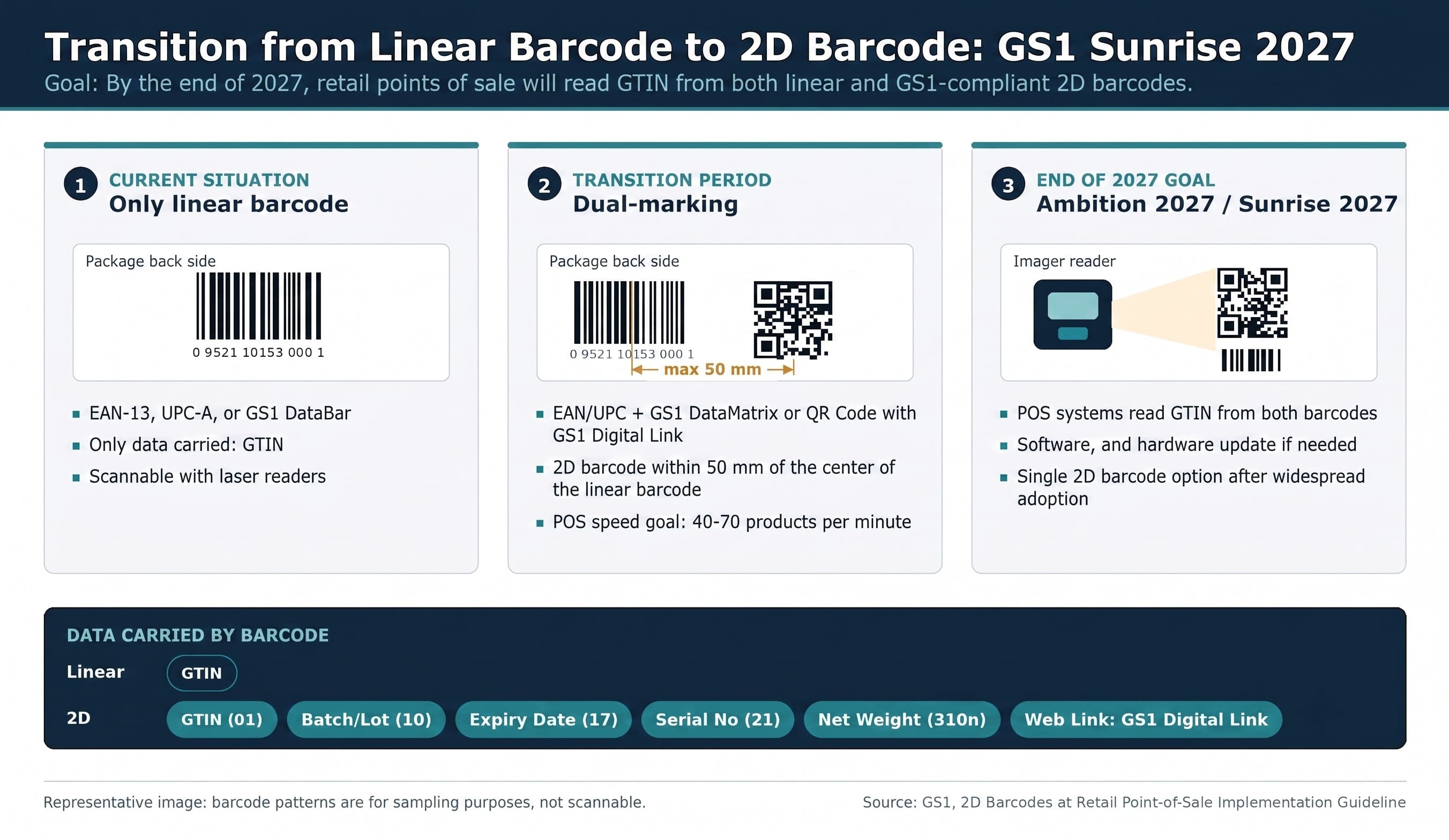
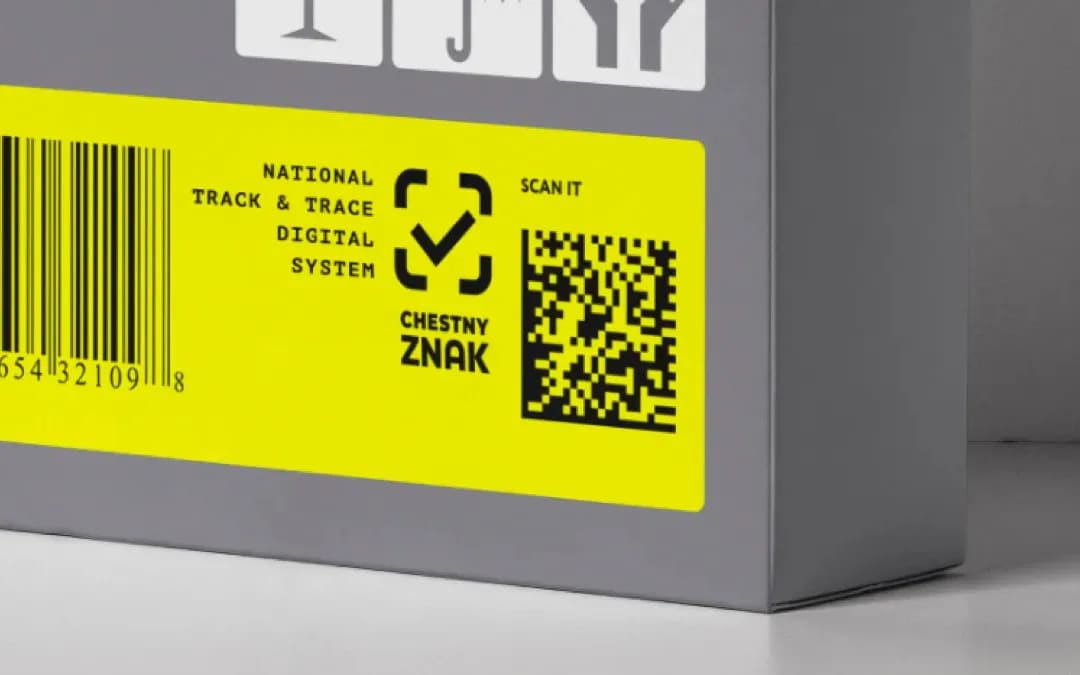
Barcodes, Data Matrix, or QR codes applied via laser or inkjet on the production line are scanned in real time by industrial cameras. The camera automatically checks each code for readability, contrast, dimensions, and data accuracy. Products with unreadable or incorrectly detected codes are removed from the line through a reject mechanism. This camera-based code verification process ensures that only products with validated, high-quality codes proceed to the next stage; read errors and shipment issues that could occur in the supply chain are prevented at the point of production.

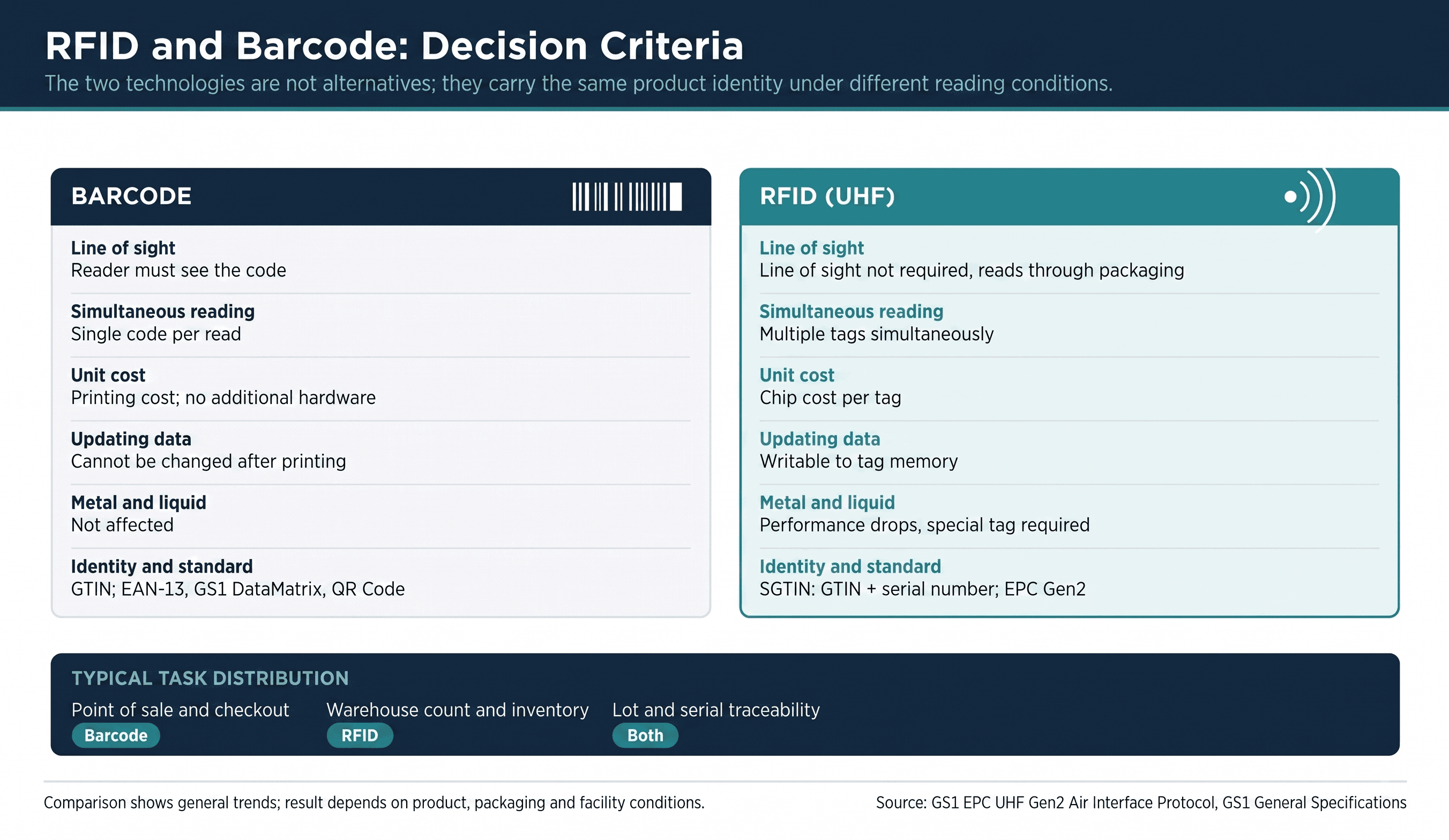
Track & Trace systems employ different coding and identification technologies selected according to application requirements. Laser coding provides permanent marking without consumables and is suitable for high-speed lines, though contrast limitations may occur on certain surfaces and colors. Inkjet coding is preferred for high-contrast, large-format printing, particularly for case and pallet labeling. 2D Data Matrix is the industry standard for serialization due to its high data capacity in a small area and resilience to partial damage. RFID offers the advantage of bulk reading without line-of-sight and is a strong option for logistics scenarios such as pallet tracking and warehouse management. Technology selection depends on line speed, packaging material, and operating environment.

The industrial traceability system is integrated with existing corporate infrastructure for effective operation. Serial number, lot, and aggregation data generated on the production line are transmitted to the MES system via industrial protocols such as OPC UA. MES handles production order tracking, quality status, and process data management, while WMS manages warehouse location, pallet content, and shipment verification processes. This data is bidirectionally synchronized with ERP platforms (such as SAP, Oracle, Microsoft Dynamics) through REST APIs, SOAP, or custom connectors. ERP, MES, and WMS integration eliminates manual data entry and ensures data integrity across the organization from production to shipment.

Traceability requirements vary by sector, country, and customer demands. Regulated industries such as tobacco and pharmaceuticals have legally mandated tracking systems, while in automotive, food, and general manufacturing, traceability is typically driven by quality standards, customer requirements, or internal audit policies. GS1 standards form the technical foundation of this structure: GTIN for product identification, SGTIN for serialized units, and SSCC for logistics units such as pallets. Our systems automatically generate GS1-compliant identifiers and structure audit reports to accelerate quality traceability and compliance processes.

Implementation timeline varies based on the number of production lines, process complexity, and integration scope. A project covers process analysis, architecture design, hardware installation (printers, cameras, reject mechanisms), software configuration, MES/ERP/WMS integration, field testing, and team training. A phased commissioning approach is applied to minimize impact on production: priority lines are identified, and after pilot validation, a gradual transition to other lines is carried out. Depending on project scope, timelines and phases are clarified during the initial technical analysis.

Ready to transform your production processes?

Let us design a traceability solution tailored to your operational flows.